Network News
Sharing information, stories and more...
OCTOBER 2026
EDITION 30
From the National Office
Hello everyone,
Before sharing the latest funding update, I want to recognise two important moments across our network.
Firstly, congratulations to our 2026 Change Makers graduates. You have brought commitment, curiosity and generosity to the program. I hope the connections and learning you have gained continue to support you in your work.
It was also wonderful to see National Office team members and network colleagues meeting and learning together at the Early Childhood Australia and Australian Institute of Family Studies conferences. Being part of these wider conversations helps us reflect on our practice and brings fresh ideas back into our work with children and families.
I know many of you are also waiting for news about future HIPPY funding and contracting arrangements.
The Brotherhood of St. Laurence has submitted its proposal for future HIPPY delivery. The proposal is being considered through federal government decision-making processes, and we have not yet received a final decision. Current advice suggests a decision may be received by early November, although this has not been confirmed and could change.
We understand how difficult this uncertainty is for organisations and teams planning for 2027. When formal advice is received, we will move quickly to meet with provider leadership and discuss what it means and what happens next. Provider CEOs and senior leaders have received a separate update so they can consider any matters requiring early attention.
At this stage, we do not have further information about individual providers or sites. Coordinators and line managers can send questions or concerns to the HIPPY Australia inbox . This will help us understand what is on people’s minds and share consistent information.
Thank you for continuing to support your teams, families and communities while we wait. We will keep you informed as soon as more information becomes available.
Warm regards,
Clare Seddon
Head of HIPPY and Early Years
Key Program Dates
Submit the Annual Financial Report (FY25/26) on or before 14 October 2026.
Importantly, the due date cannot be extended. This report must be certified by your CFO (or equivalent) and your CEO or a member of your governing board. Refer to the Finance Update section for details.
Resume Writing and Responding to Job Ads
Thursday, 05 November | 12:30 - 2:30 pm AEDT
Refer to the HIPPY Training section for details.
Cover Letters That Stand Out
Thursday, 12 November | 12:30 - 2:30 pm AEDT
Refer to the HIPPY Training section for details.
Edition 31 of the newsletter will be published before mid-November.
Please log a ticket via the HIPPY Support Portal to contribute content or change your subscription preferences.
Interview Skills and Confidence Building
Thursday, 19 November | 12:30 - 2:30 pm AEDT
Refer to the HIPPY Training section for details.
As per the Site Reporting and Funding Obligations, invoices for the December 2026 period are due by 30 NOV.
For support, contact ETO support through the HIPPY Support Portal .
National Office Updates
After several years at SNAICC-National Voice for our Children, Jacqui Ruhle has returned to HIPPY as First Nations Practice and Network Development Lead.
A proud Ngiyampaa woman, Jacqui was drawn back to HIPPY by the opportunity to work alongside the First Nations Network Sites, supporting delivery in ways that reflect community strengths, priorities and cultural ways of working.
Jacqui is looking forward to reconnecting with the HIPPY community, and welcomes you to reach out to her directly
A big thank you to Coordinators and Tutors involved in completing the annual stocktake.
Thanks to the information you sent in, we’re now calculating the amounts to send out to sites in preparation for delivery in 2027. More information about the timing will be sent out in the weeks ahead.
For any questions about your site’s stocktake or curriculum materials, please contact us directly (clicking the link opens a separate window)
In 2026, the Change Makers Program brought together 20 Coordinators and 43 Tutors across three learning groups to explore leadership, connection and personal growth through storytelling and reflection.
Participants reflected on their experiences, values and strengths, and considered how they relate to people whose backgrounds and perspectives differ from their own. The program built self-awareness by exploring communication styles, giving and receiving feedback, advocacy skills, and finding your voice in different settings.
Storytelling was a strong thread throughout the sessions. Tutors and Coordinators practised sharing their experiences in ways that build understanding and empathy. By listening to each other’s stories, they gained new perspectives and a clearer sense of how lived experience can be a source of learning and leadership.
This year’s Change Makers graduations will be held on 20, 21 and 22 October. Participants will celebrate their achievements alongside representatives from the Department of Social Services and the Hon Ged Kearney MP, Assistant Minister for Social Services and Assistant Minister for the Prevention of Family Violence.
We encourage the network to invite Change Makers participants to talk about their experience of the program and share what they learned along the way. This could include contributing to a Community of Practice discussion, facilitating part of a Gathering, working alongside a newer Tutor or representing their site in a community setting. Hearing directly from participants can help teams recognise and build on their strengths.
As we look ahead to Change Makers 2027, feedback from this year’s participants, their managers and program facilitators will help inform the next program. We encourage teams to start a conversation about who may be interested in taking part. Together, we can build on what we have learned and continue creating opportunities for leadership, connection and new voices to grow across the HIPPY network.
HIPPY Australia at AIFS, Melbourne | 09 - 11 SEPT
HIPPY Australia presented on the outcomes from the Inclusion Action report (awaiting final publication), lessons from HIPPY’s transition to Local First Nations leadership, and a presentation on the DSS evaluation of HIPPY, "Learning from the HIPPY Evaluation: Methodologies and approaches to social policy evaluations".
Anglicare Australia National Conference, Darwin | 20 - 23 SEPT
The joint workshop was led in partnership with Anglicare WA and ac.care, sharing ongoing learnings from partnering with ACCOs and community-led decision-making.
The HIPPY Australia National Office (HANO) was well represented at the Early Childhood Australia (ECA) conference. As the National Office, it matters that HANO remains committed to staying engaged in learning across the Early Years sector. We were privileged to attend, listen and learn from our peers.
We also presented a poster: Lessons from the transition of HIPPY to local First Nations Providers.
The First Nations Governance Network (FNGN) is facilitated by Mark Yettica Paulson and Collaboration for Impact.
It brings together organisational leaders from First Nations HIPPY providers, leaders from SNAICC, a key policy and advocacy partner leading Transition and Transformation across the country, and BSL leaders.
The Network's October face-to-face meeting included an opportunity for senior DSS representatives to attend and take part in dialogue about where ACCOs see the future state of HIPPY in First Nations communities.
The Network has now met five times in 2026, twice in person, with more meetings scheduled in the coming weeks (dates to be confirmed).
For more information about the Network, or matters being discussed, please contact Annie Kent, Senior Manager, HIPPY First Nations Network, at annie.kent@bsl.org.au
Building on Head of HIPPY Australia Clare Seddon's opening message, The Department of Social Services has now published the HIPPY evaluation reports on its website. Both Stream 1 & Stream 2 reports can be accessed via the external link. The evaluations and analysis were conducted by the Parenting Research Centre, Curijo, IPS Management Consultants and the Australian Centre for Evaluation.
Key findings include HIPPY helps to:
- enhance the home learning environment
- improve indicators of early literacy
- strengthen parent-child relationships
- increase parents' confidence and engagement in their child's learning
- build stronger connections between families and their communities
These findings provide a strong foundation for continuing to invest in early years approaches like HIPPY, which support children’s learning and development, allowing them to thrive when they get to school and building parents' confidence as their first teacher.
HIPPY Australia will review the findings in detail and provide a summary of the key findings shortly.
L&D Updates
An interactive three-part Learning Opportunities for Tutors workshop series is planned with Tutors in mind this November.
It is designed to offer practical tools and real-world strategies to help navigate the job search
process and take positive steps towards employment. The sessions will be facilitated by experienced employment coaches and grounded in the Advantaged Thinking approach.
Trainers
Casey Townsend, Employer Connections Coach at Thrive Hub Yarra
Anna Johnson, Development Coach at Thrive Hub Seymour
Look for the workshop details, learning outcomes, and joining information in the HIPPY Training Opportunities section below.
Recordings from recent network learning sessions are available on the LMS.
Why the Early Home Learning Environment Matters
Thank you for submitting your questions for Warren and for the additional feedback. It is terrific to know how many of you found the presentation useful. We have collated the questions and sent them through. Warren’s answers will be published in the next edition.
Get Pitch Ready: HIPPY Media Training workshop
Your strong attendance at the session indicates how many of you are planning ahead of this year's Graduation season. The opening poll has informed us that the changing barriers include creating a database of who to contact locally, uncertainty around consent, and a shrinking local media landscape in some areas.
Thank you to those who have provided feedback.
Keep us informed about what worked, what didn't, and what you'd like to see more of by filling out this 2-minute feedback form .
We look forward to circulating the 2026 Graduation Media Toolkit shortly.
Finance Updates
The Annual Financial Report (FY25/26) is due to HIPPY Australia by 14 October 2026.
Extensions cannot be granted for this report.
Sites should complete the relevant tab in the Financial Reporting Template and enter the required information into ETO. The certified copy must be uploaded to ETO at the same time as your completed Annual Financial Report, using the relevant tab in the financial reporting touchpoint.
All reports must be certified by BOTH your CEO (or equivalent) or a member of your governing board, and CFO (or board member). The certified copy must be uploaded alongside your ETO submission.
Instructions for uploading documents can be found in the Financial Reporting Template.
The CFO (or equivalent) must be a member of CPA Australia, the Institute of Public Accountants, or Chartered Accountants Australia and New Zealand. If they are not, the report must be signed by your Treasurer or your Company Auditor under the Corporations Act 2001 (Cth).
If your site is required to submit an Auditor's Opinion, you may submit your Annual Financial Report by the due date and provide the Auditor's Opinion once it has been finalised. Sites required to submit an Auditor's Opinion will be contacted individually by HIPPY Australia at BSL's Auditor's request.
Please note that failure to submit by the due date may result in compliance action, including a formal warning or breach notice.
If you have any questions, please contact ETO HIPPY support by logging a ticket via the HIPPY Support Portal or email the HIPPY Australia inbox directly.
- Reporting requirements and due dates are set out in the HIPPY Data Collection Guide on the HIPPY Online Library
- The Financial Reporting Template is available to download from the HIPPY Online Library here
Quality and Performance Updates
ETO Support team met with a representative from one of the Communities of Practice to discuss suggested improvements to the Pack Delivery form. Below is a summary of the next steps.
Available now
- Time spent functionality
Previously, recording delivery time of less than one hour meant manually entering a zero in the hours field before saving the touchpoint.
This question now carries zero hours as the default field value, which can be changed if required. - 'All' or 'none' feature for activities completed
The "None" option on the previous-week activities question was hard to see.
This now sits at the top of the response list. - Delivery language
For families receiving delivery in a language other than English, ETO now remembers the previously selected language and populates it automatically.
Staff can still change it when needed.
Coming soon
- An 'All' option for activities completed, removing the need to select each activity individually
- An 'All' option on the question recording which HIPPY tools were discussed during a delivery, the 3 Cs, Behaviour Specific Praise and Everywhere Learning
- The service referral tab will move from after general comments to before general comments, improving the flow of data entry and making referrals less likely to be missed
Requests under consideration
- Double pack delivery on one touchpoint
DEX would treat this as a single delivery, and activity completion and HIPPY tools data cannot be recorded when multiple packs are selected - Preventing duplicate pack entry
Restricting each pack to one submission would prevent sites that deliver a pack across multiple home visits from recording the data accurately - Combining Gatherings and Pack Delivery touchpoints
DEX requires pack delivery and enrichment at Gatherings to be recorded separately. Sites also reported difficulties with the Gathering Enrichment touchpoint when families received different packs, or when comments for individual families were needed
The changes above are being rolled out to make data entry quicker for Sites.
We encourage you to continue raising suggestions at your CoP.
Reminder: The interactive ETO Refresher Module is available on the LMS for ETO refresher and to assist with new staff onboarding
Visit the HIPPY Support Portal for day-to-day solutions, compliance steps, or tech support.
We are well past the midway point of the 2026 HIPPY year, and Coordinators and Line Managers have once again carried the program remarkably in their communities.
Reflecting on the Line Manager and Coordinator reports for the January to June 2026 period, we have pulled together the themes that Sites indicated had the greatest impact.
While not an exhaustive list, it is a snapshot of the challenges, successes and community connections that came up consistently across the network.
Challenges
- Keeping families engaged was the most consistently reported challenge across all sites. Families are returning to work, taking up study, starting kinder and preschool, and managing cost-of-living pressure, family crises and health issues
- Tutor recruitment and retention was the next most common theme. Sites described difficulty finding suitable staff, shortages affecting delivery, current staff moving into other roles, competition from higher-paying positions, and recruitment delays
- Recruiting families also came up across the network: lower awareness of HIPPY in new communities, new catchment areas, reaching Aboriginal families, engaging culturally and linguistically diverse families, and the time it takes to build trust before a family enrols. Many sites described recruitment as a year-round effort rather than a once-a-year push
Successes
- Relationship-based practice was the strongest theme to emerge from both report sets. Sites consistently report that trust between Tutors and families is what drives retention across the two years
- Flexible delivery was the other standout, and it is closely tied to retention. Sites are meeting families where they are through tailored delivery plans, online sessions, phone support, meet-ups in community locations and flexible pack delivery scheduling
Together these approaches have supported strong retention, high re-enrolment and outcomes that exceed targets at many sites. Just as importantly, they have kept families in the program through circumstances that could easily have ended their HIPPY journey.
Connections with other services
- Early childhood services and schools were named by both Coordinators and Line Managers as key partnerships, with collaborations across schools, kindergartens, preschools and childcare centres creating reciprocal benefits for children’s learning and school readiness
- Cross-service referrals were another clear contributor, with strong links reported to family support, health, mental health and housing services
- Sites also noted that connections with Aboriginal Community Controlled Organisations have strengthened delivery through partnership, cultural governance, referrals, community leadership and initiatives that promote cultural safety
The themes above are shared ones. If retention or Tutor recruitment is sitting heavily with you right now, it is worth raising at your next CoP, as someone in your region is very likely working on the same thing.
Thank you to the Quality and Performance team for consolidating the reports.
Communities of Practice (CoP) Digest
HIPPY Australia does not currently provide a ready-to-print t-shirt design. Sites are welcome to create their own using the HIPPY Australia brand assets.
All designs must be emailed to HIPPY Australia for approval before printing, so we can ensure the designs meet brand guidelines.
Brand resources, including the Style Guide, logos, artwork and Brand FAQs, are available on the LMS and the Support Portal article
We understand that buying basic materials such as boxes, glue and string site by site takes time and creates extra work for finance and administration.
Unfortunately, the conditions of our contractual arrangement with the Department of Social Services mean HIPPY Australia is not permitted to facilitate bulk ordering or centralised purchasing. DSS requires that we do not recommend or suggest preferred vendors or suppliers, so we cannot organise or endorse procurement arrangements on behalf of sites.
What sites can do:
Work together within your CoP to increase collective bargaining power. CoPs can explore pooled purchasing within a region, where sites choose their own vendors and negotiate locally. Sites are also encouraged to share general approaches that have worked, without naming suppliers.
We will add this topic to future CoP agendas.
For a list of questions and answers raised during the recent CoP sessions, please visit the HIPPY support portal
HIPPY Training Opportunities
Create a professional resume that highlights strengths and experience, and tailor applications to specific opportunities.
Learning outcomes include:
- knowing the difference between a good resume and a bad resume
- articulating and demonstrating skills and experience in a detailed manner
- identifying key achievements
- articulating a clear statement of their career objective/summary
Date: Thursday 5 November
Time: 12.30-2.30 pm AEDT (Melbourne, Sydney) | 11.30 am-1.30 pm AEST (Queensland) | 12.00-2.00 pm ACDT (Adelaide) | 9.30-11.30 am AWST (Perth)
Write clear, professional cover letters that capture an employer’s attention and demonstrate suitability for a role.
Learning outcomes include:
- interpreting job ads and position descriptions
- tailoring resumes and cover letters for job advertisements
- understanding Key Selection Criteria and how to respond
- having an understanding of the impact of AI on the job application process
- understanding the importance of making contact with the employer if applicable
Date: Thursday 12 November
Time: 12.30-2.30 pm AEDT (Melbourne, Sydney) | 11.30 am-1.30 pm AEST (Queensland) | 12.00-2.00 pm ACDT (Adelaide) | 9.30-11.30 am AWST (Perth)
Interviews can be challenging, but preparation makes a real difference. This session helps you build the skills and confidence needed to perform well in interviews, feel more prepared, capable and ready to take the next step in your employment journey.
Learning outcomes include:
- preparing for various job interview formats (online, face-to-face, group)
- preparing for common interview questions and structuring responses
- having an understanding of how presentation impacts an interview
- having the confidence to prepare and also ask appropriate questions during an interview
- following up effectively post-interview
Date: Thursday 19 November
Time: 12.30-2.30 pm AEDT (Melbourne, Sydney) | 11.30 am-1.30 pm AEST (Queensland) | 12.00-2.00 pm ACDT (Adelaide) | 9.30-11.30 am AWST (Perth)
External Training Opportunities
Australian Childhood Foundation is running a two-hour virtual workshop exploring why children behave the way they do, and how adults can help them meet their needs in a more positive way.
The session looks at behaviour as communication, particularly for children who do not yet have the words, confidence or sense of safety to express a need directly.
It asks who a behaviour is actually challenging for and encourages participants to reflect on their own tolerance levels and the language they use when describing children’s behaviour.
Rather than in-the-moment de-escalation techniques, the focus is on the frameworks that help us understand what sits beneath a behaviour.
Who it suits: educators and early-learning staff, family support services, and practitioners working alongside children who have experienced trauma.
Coordinators and Line Managers may find it useful.
Date: Thursday 15 October 2026
Time: 10:00 am - 12:00 pm AEDT (Melbourne, Sydney, Canberra)
Cost: $110
Please note: places for 15 October are limited. Please contact the Organiser directly for additional information.
This is a paid, external workshop; please check with your Line Manager before registering.
The Centre for Community Child Health sees the Thriving Kids as a unique opportunity to put evidence into action and improve children's development and empower families.
The Implementing Thriving Kids series , written by contributing authors from the Centre and partner organisations, sets out what's needed for a strong national and state/territory approach to equity-focused action.
- Issue 1 outlines a practical dual-track approach: accelerating learning while building system capability
- Issues 2-6 explore implementation across each Thriving Kids domain of support
- Issues 7-9 look at system enablers: learning and evaluation, workforce development, and the contribution of children and families
Issues 1, 3 and 7 are out now . All nine publications will be released over the coming weeks.
The free webinar on how the Mental Health in Primary Schools (MHiPS) initiative is supporting Victorian schools to build a whole-school approach to mental health and wellbeing ran on 14 SEPT online.
Webinar insights
- Schools are a non-stigmatising, universal platform for identifying and responding to emerging concerns about students’ mental health and wellbeing, but without resourcing and dedicated training and support, it can be challenging for teachers to navigate mental health challenges in the classroom
- The Mental Health and Wellbeing Leader (MHWL) role was co-designed with schools, teachers and other education stakeholders to strengthen whole-school capacity and capability to support student mental health and wellbeing
- MHiPS' expansion from a 10-school pilot to over 1,800 government and non-low fee non-government primary schools across Victoria was underpinned by sustained investment, dedicated departmental infrastructure (central and regional teams), and close collaboration between government, Catholic and independent sectors, and research partners
- MHiPS' embedded monitoring and evaluation cycle has driven ongoing refinement of training and implementation supports. The model is also being adapted for jurisdictions outside Victoria
- Evaluation shows that the MHWL role becomes more embedded over time. Reported impact also increases the longer schools have been implementing MHiPS
- Schools implementing MHiPS report increased knowledge, skills and confidence to support student mental health and wellbeing, and improved wellbeing for students, including increased help-seeking
Webinar recording and resources are available here
Follow the links to read the initiative and evaluation findings in full.
Earlier this year, Coordinators and Tutors completed the MoneyMinded Coach Training, a strengths-based way of holding financial wellbeing conversations with families. This resource picks up the same approach and extends it to school-aged children.
Marshmallow Money Australia has released Financial Capability Through Mathematics: An Evidence-Informed Curriculum Guide for Australian Schools . This free 125-page guide maps financial learning across the Australian Curriculum: Mathematics from Foundation to Year 10.
Why it's useful
While financial literacy is usually treated as its own subject, the skills behind an informed financial decision- comparing prices, working out a discount, reading a percentage, interpreting data, weighing up a long-term outcome- are mathematical reasoning skills, and children start building them well before anyone mentions money.
To a HIPPY parent, that's familiar territory. The maths is already in the shopping trip, the bus fare and the lunch order, and a parent naming it out loud is what turns it into learning.
What's in it
- Teaching ideas aligned to the curriculum, organised by year level-created for Educators
- Classroom activities and assessment suggestions
- An evidence-informed progression showing how financial understanding develops as children grow
- Real-world financial contexts for maths learning
How might it be used?
The developmental progression is the most useful part. It shows what a child can reasonably grasp about money at each stage, which helps a Tutor or parent approach a conversation at the appropriate level. For example, it provides families with older children year-level structure guidance to build what a five-minute talk at the supermarket looks like.
Note: While the guide was written for teachers and classroom use. It is an educational resource in the form of background reading for Coordinators and Tutors. Similarly, a parent can lean on it.
HIPPY Australia does not provide financial advice, and neither does this guide. If a family needs help with a financial situation, your usual referral pathways of financial counselling and local community services remain the right route.
StoryBox Hub, Raising Children Network and ARACY shared the Wellbeing Playlist, a free collection of 12 picture book titles, each matched to an area of child wellbeing.
It was mentioned at the recent Early Childhood Australia (ECA) National Conference in Melbourne, 30 September to 03 October.
Resources: The Wellbeing Playlist and Downloadable booklist.
The framework behind it
The collection is guided by The Nest, Australia's first evidence-based framework for child and youth wellbeing developed by ARACY in 2013 after consulting more than 4,000 children, families and experts. It is free to use under a Creative Commons licence.
The Nest describes six connected domains children need to thrive: Healthy; Valued, Loved and Safe; Material Basics; Learning; Participating; and Positive Sense of Identity and Culture.
None of the six sits alone. Each supports and strengthens the others, and a good story can touch several at once.
Suggestions for use
HIPPY understands that a storybook does more than teach letters. A story opens a conversation between a parent and a child, and much of the real work happens in that conversation.
The Wellbeing Playlist maps it. It names what a story supports, whether that is belonging, safety or participation, providing tutors and parents with language for something they are already doing.
Each title comes with downloadable resources: curated parenting content from Raising Children Network, plus ideas for extending the story into conversation and play. StoryBox Hub has matched further suggested titles for anyone wanting to go deeper.
Choose a title that matches the focus of a gatherings session or home visit and use the extension activities. Additionally, each title has curated parenting content from Raising Children Network built in, ready for home use.
ARACY is the Australian Research Alliance for Children and Youth, and the developer of The Nest and The Common Approach®.
Network Success and Innovation
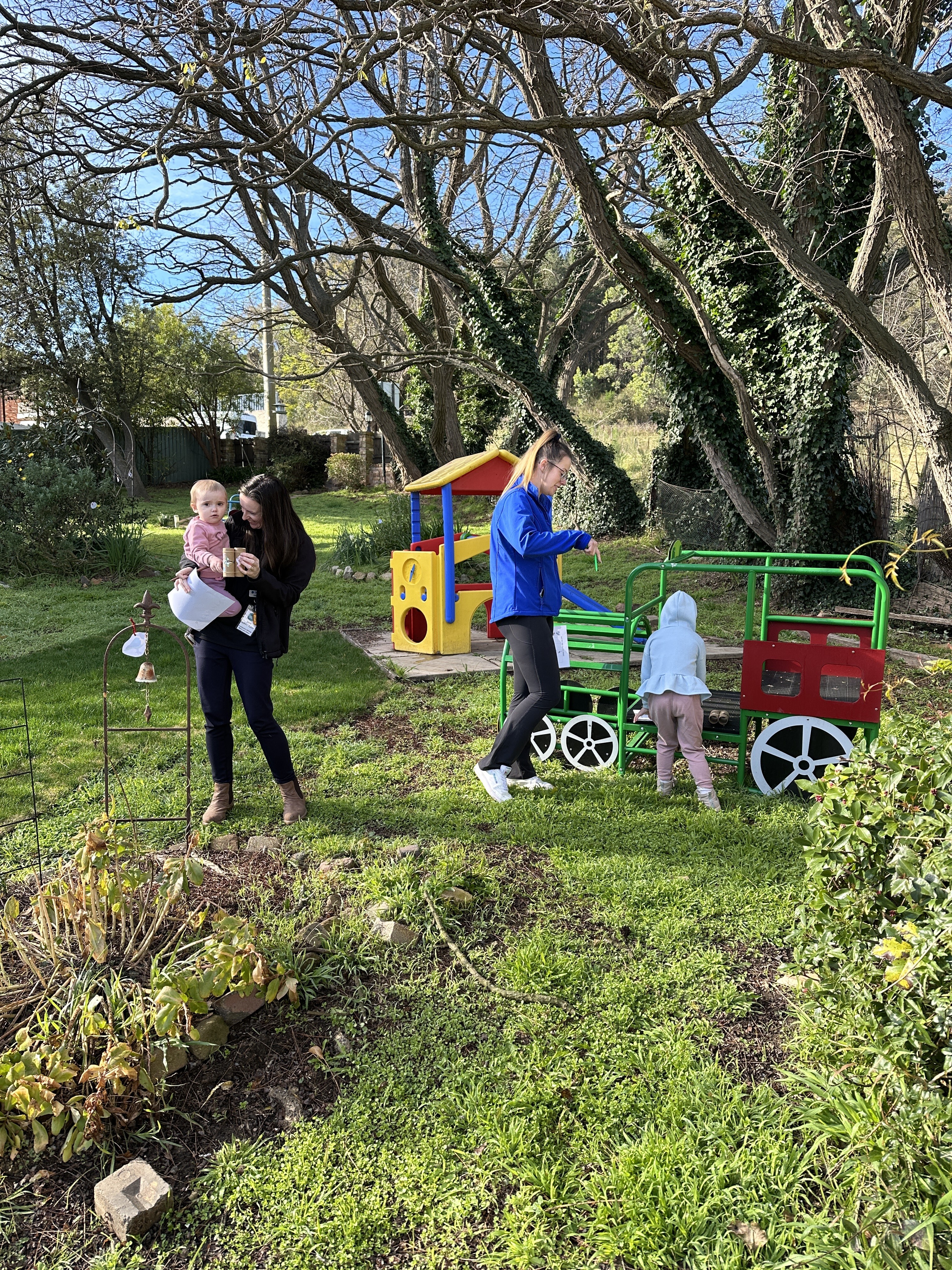
At the foot of the Blue Mountains in Lithgow, HIPPY Bowenfels has been making the most of a new home. The site’s office was once a small house with a large garden, owned by a church and linked to Centacare. That garden has become a central part of the program.
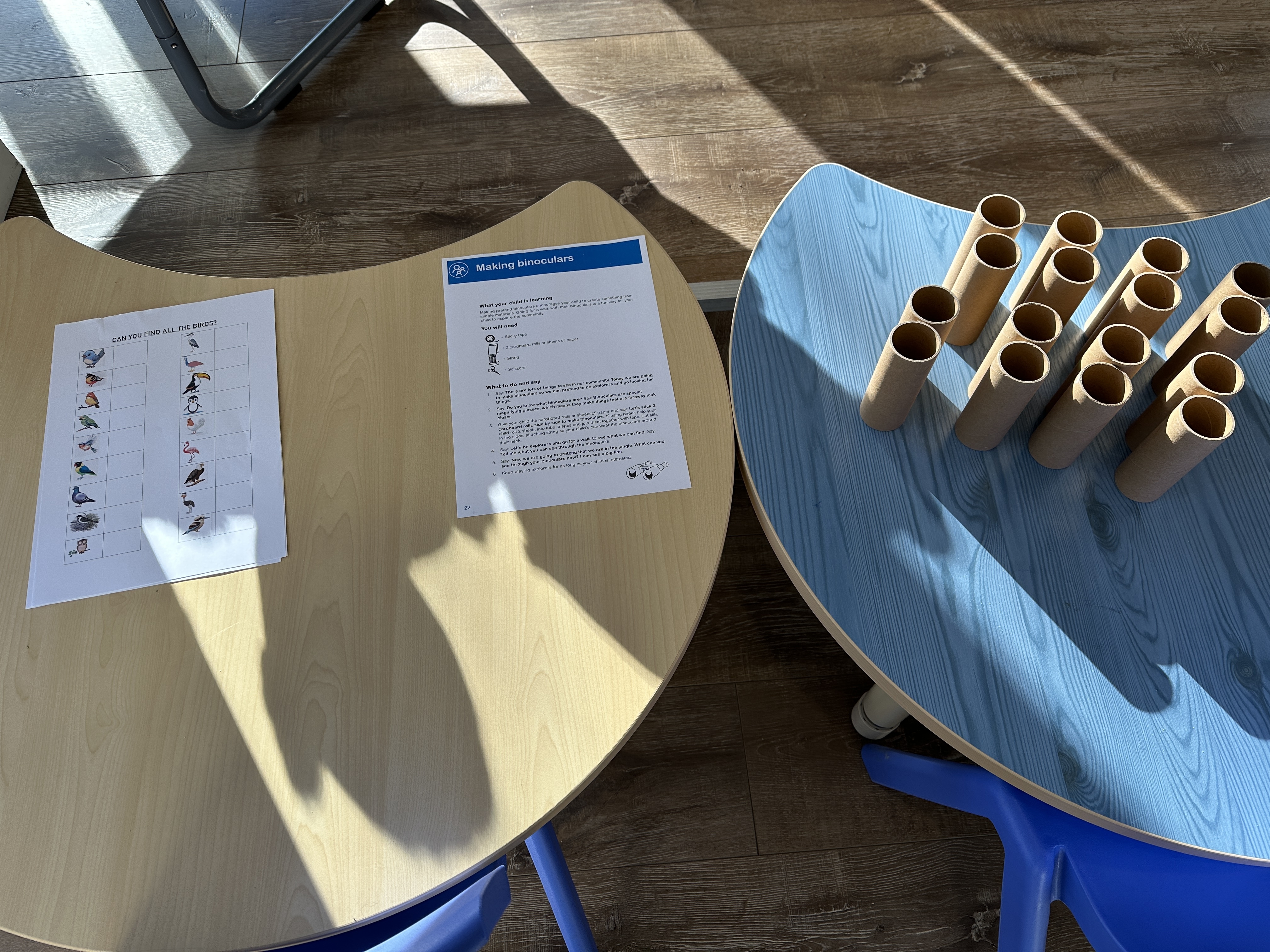
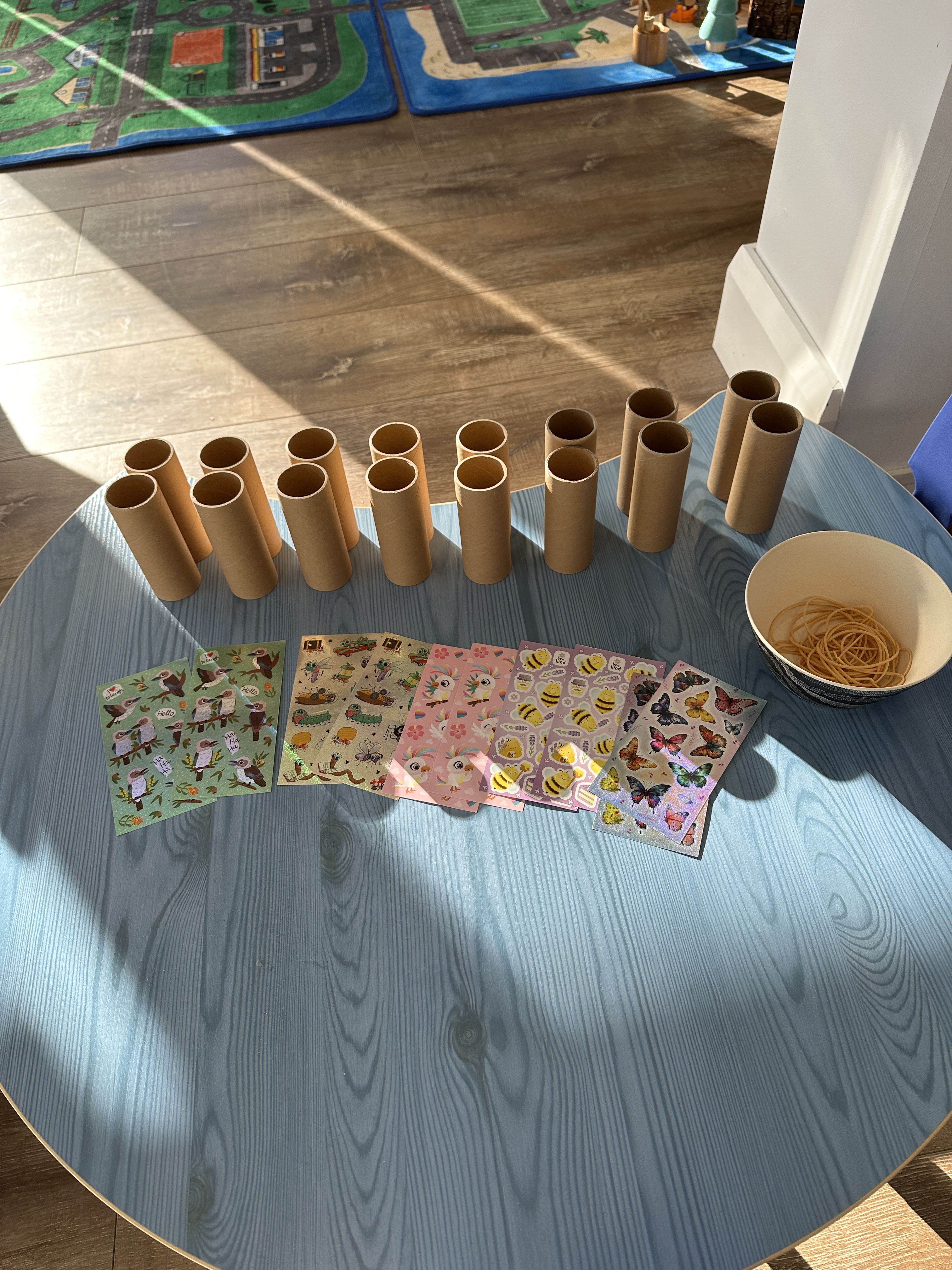
Over winter, Coordinator Natasha Young combined two Age 4 pack activities into a single outdoor bird-watching session for a Gathering. Paper birds were hung through the trees in the HIPPY garden, and families were sent out with an activity sheet* to find them, look up, and record what they spotted.
 |  |
 | 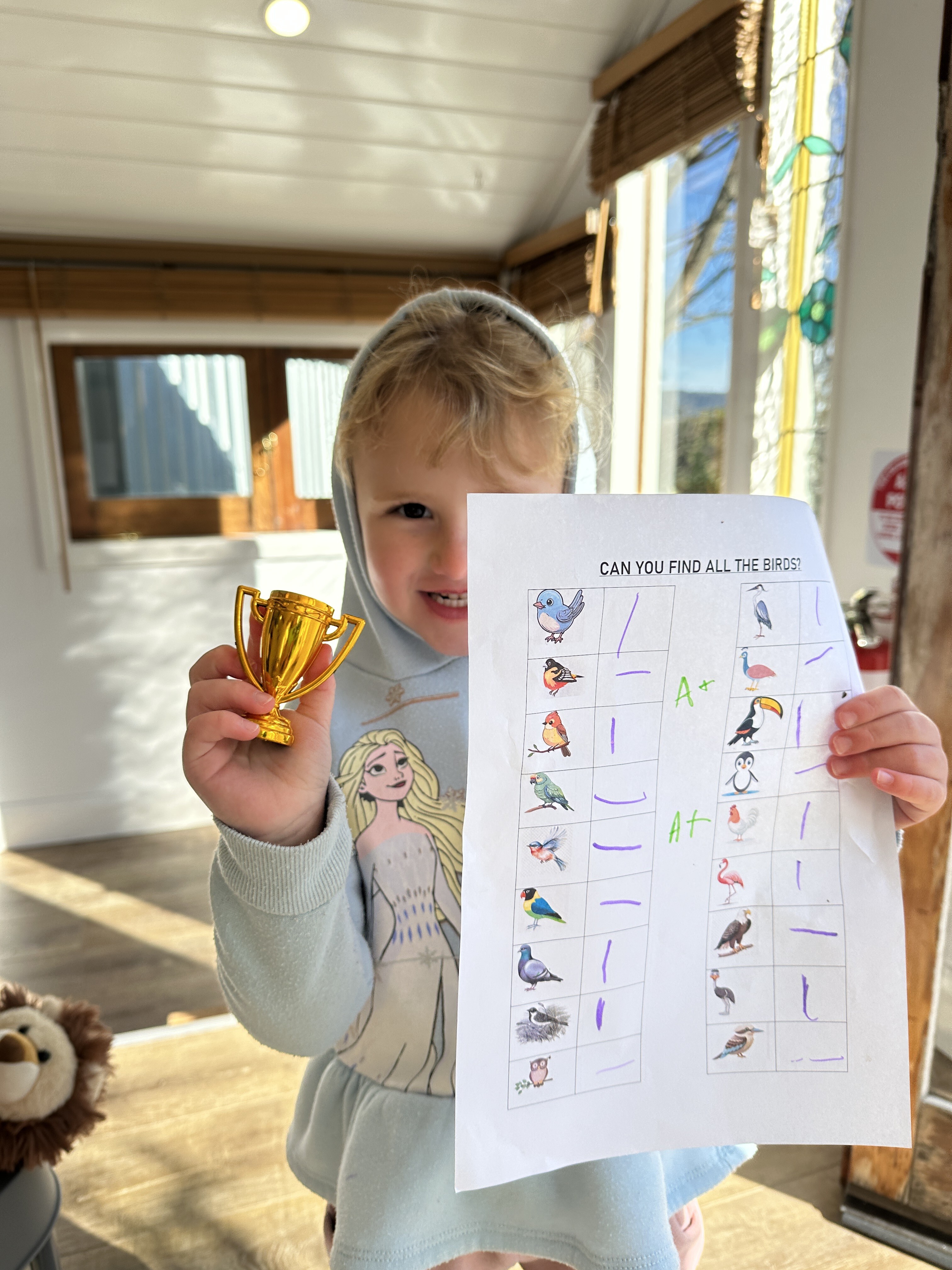 |
It is a simple idea with a lot packed into it: children practised looking, counting and matching. Families got outside together in the middle of winter, when it is easiest not to. And the activity turned the HIPPY garden into a shared space that belongs to the program and the families in it.
Two pack activities, one afternoon, and almost no cost. If you have outdoor space: your own, a park, a neighbourhood centre yard- the same idea travels easily.
*Contact Natasha if you're interested in a copy of the activity sheet. She has also offered to talk it through with any site that would like to try it.
With thanks to Natasha Young, Coordinator at HIPPY Bowenfels, and to Amy Taylor for bringing us this story.
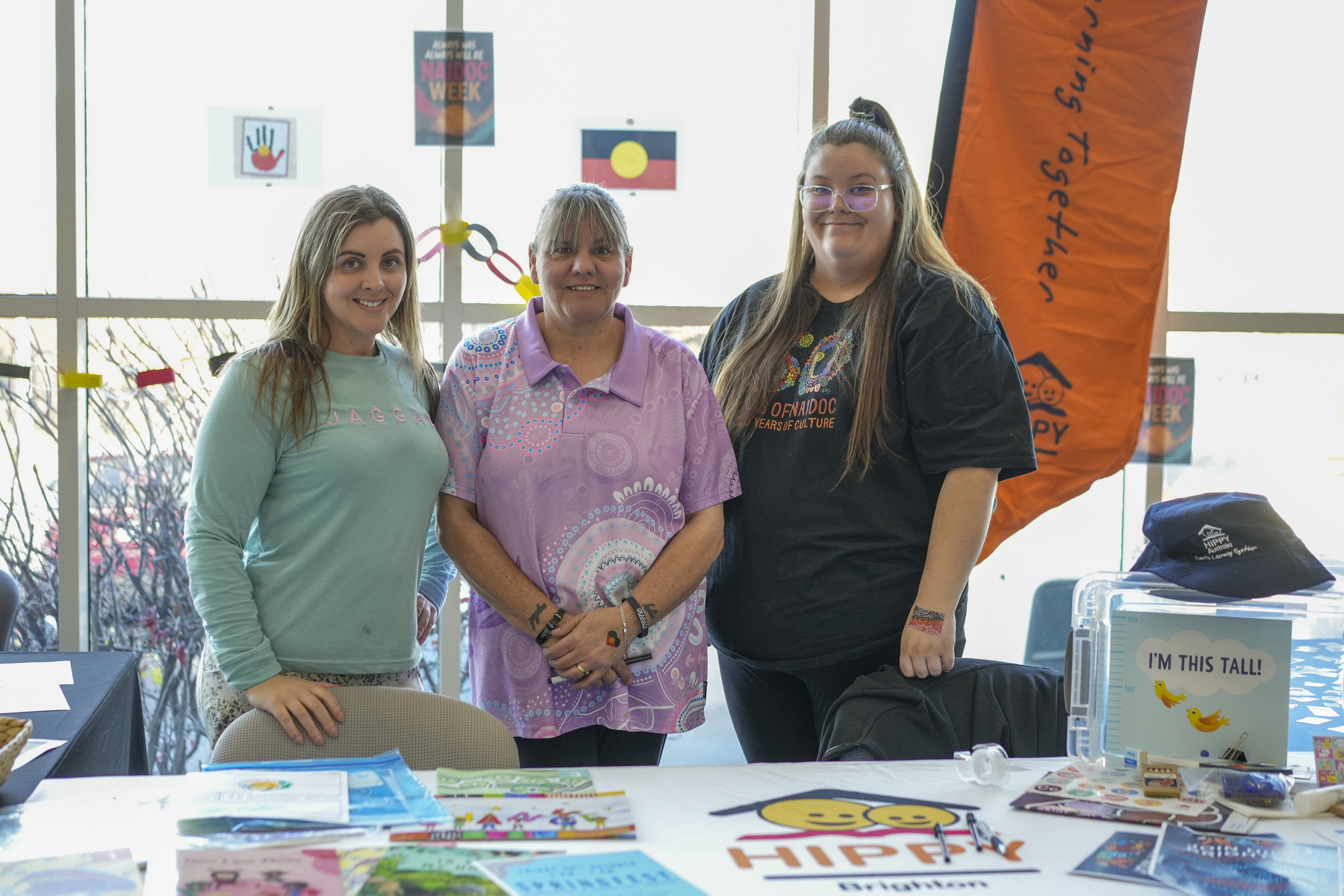
HIPPY Brighton in Bridgewater, Tasmania, was part of local NAIDOC Week celebrations hosted by the Kutalayna Collective, Connected Beginnings Lutruwita and was named in the community’s thank-you to partners alongside the Tasmanian Aboriginal Centre Rangers.
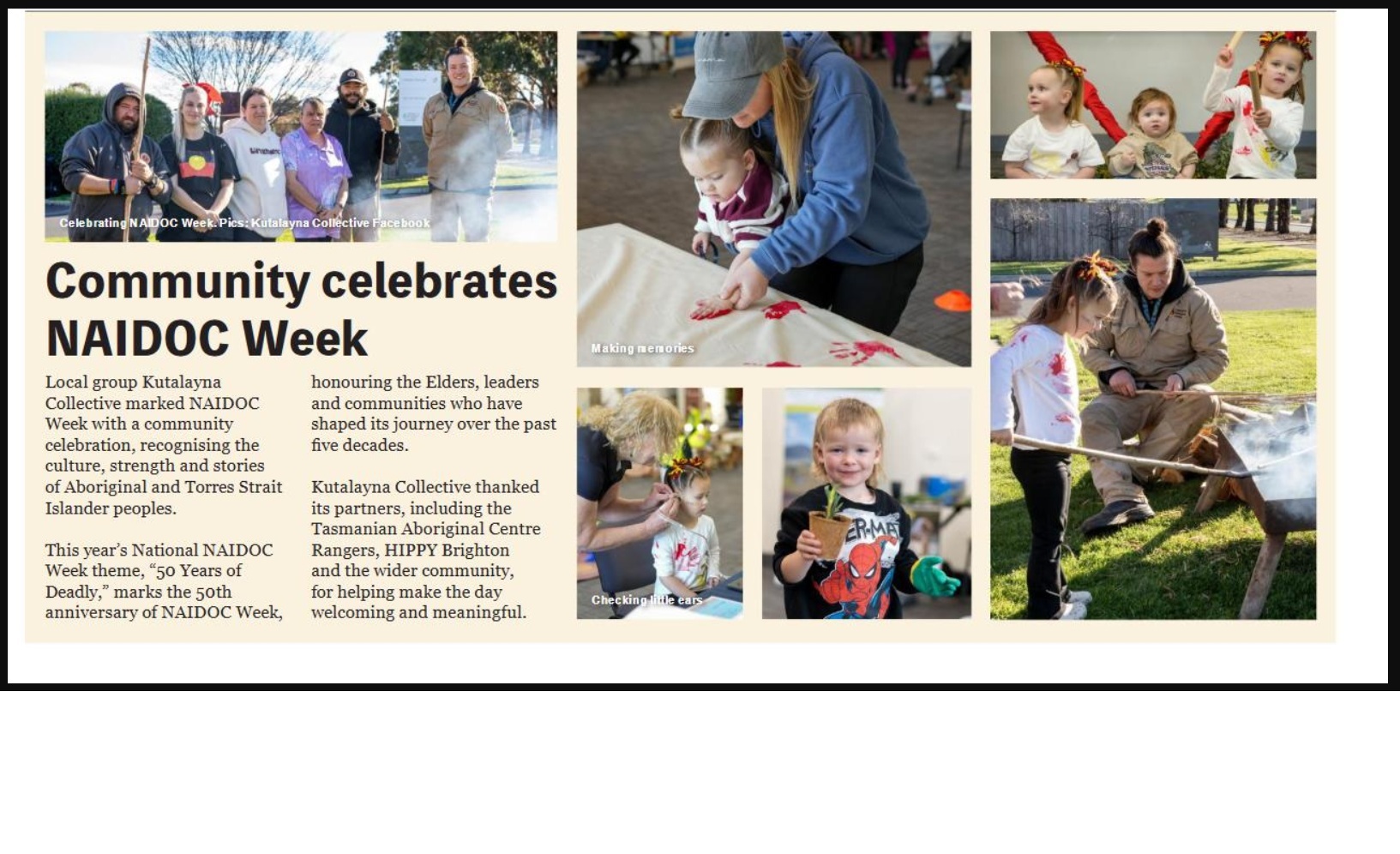
This year’s National NAIDOC Week theme, "50 Years of Deadly," marked the 50th anniversary of NAIDOC Week and honoured the Elders, leaders and communities who have shaped it over five decades.
The celebration was covered in a photo wrap in the Brighton Community News on 11 September, reaching an audience of around 25,000.
 |  |
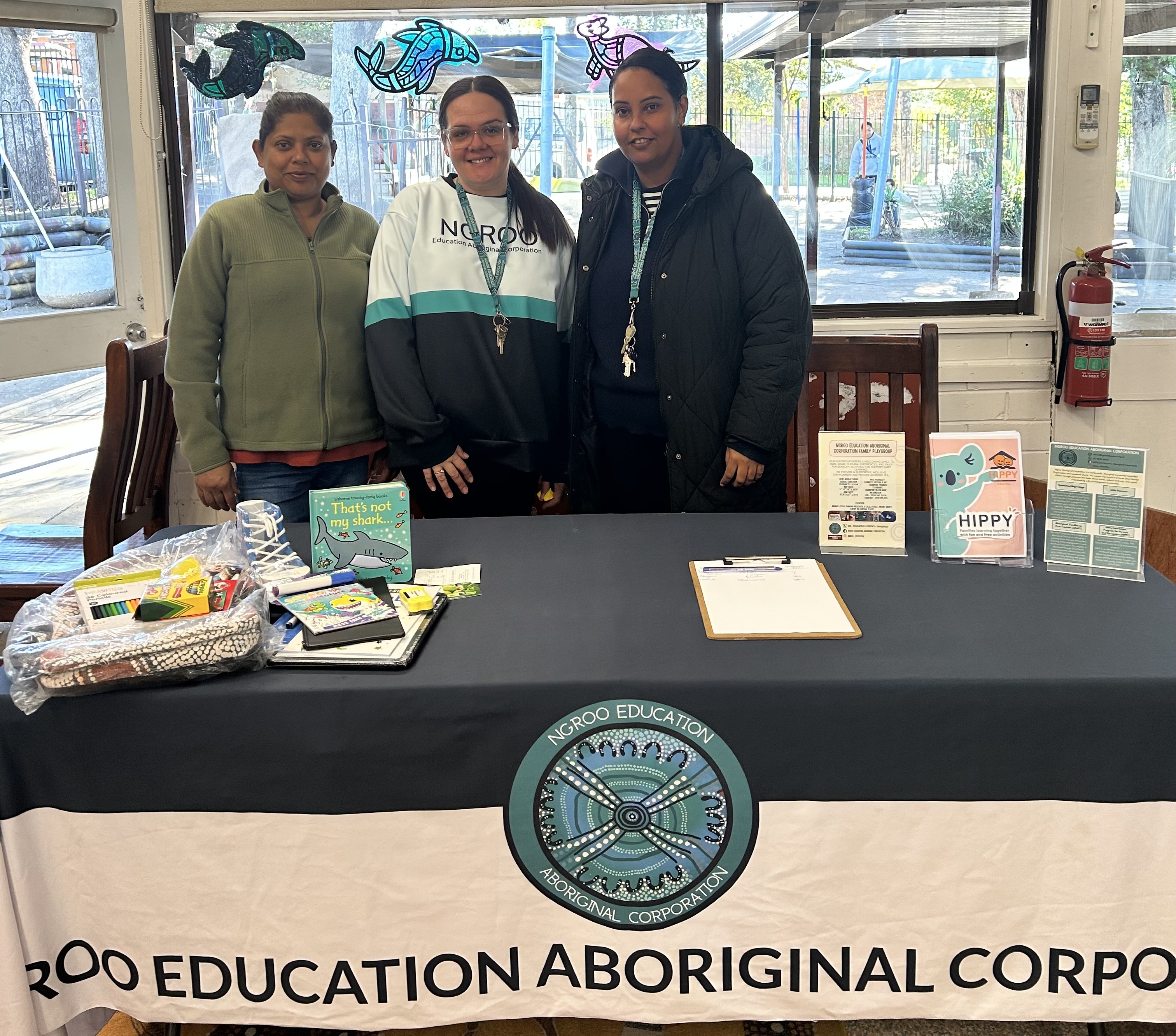
Ngroo Education Aboriginal Corporation, Mount Druitt, Western Sydney
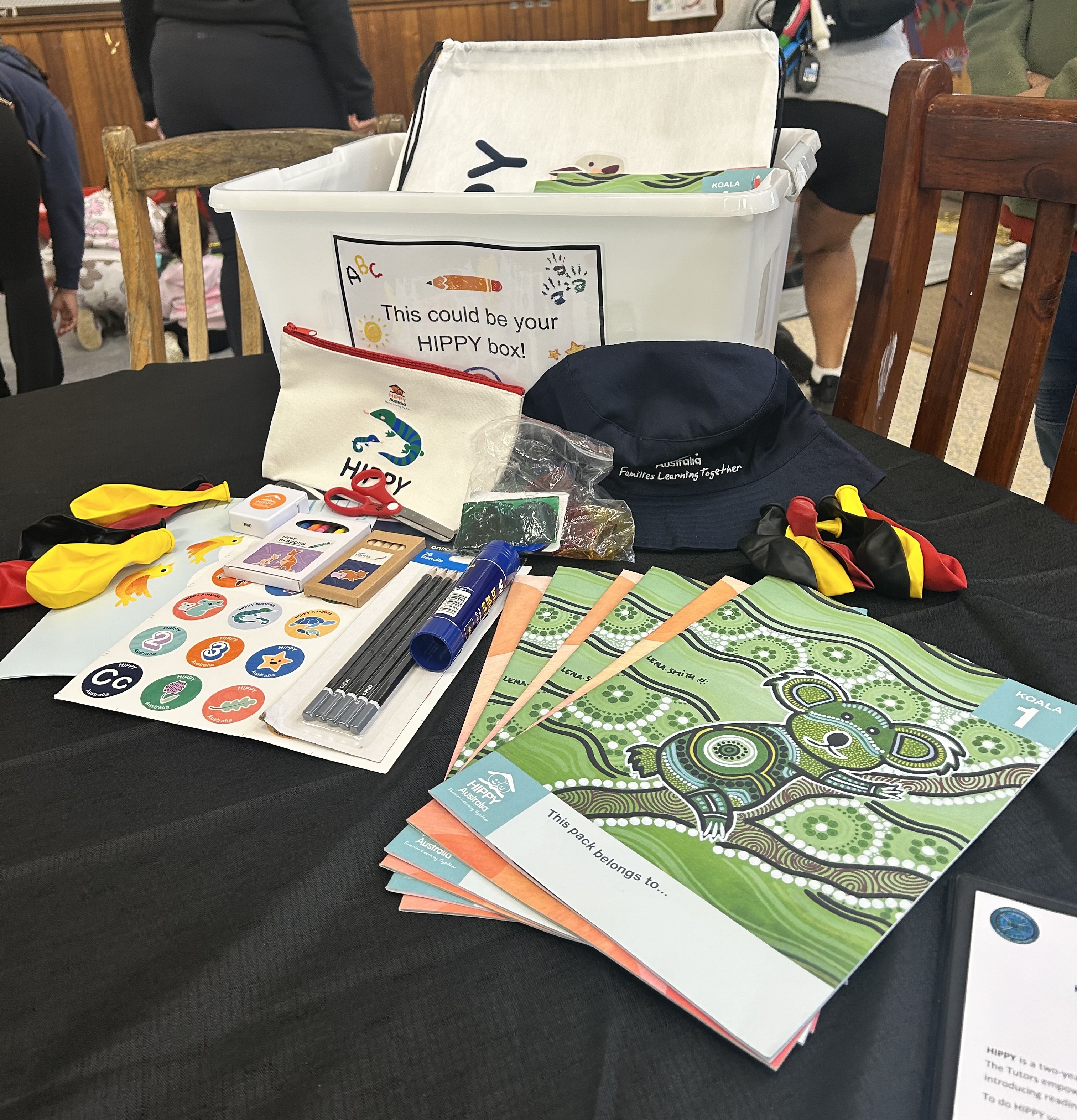
HIPPY Emerton moved to a new provider organisation, Ngroo, this year, and the site's early work has been focused on tuning into service operations, established systems and adapting them for HIPPY families.
Several of our Network provider sites sit inside multi-program organisations. What makes Emerton worth watching is how deliberately Coordinator Letitia Williams has morphed existing connections.
Ngroo's support services for families include:
- Connected Beginnings: health and education
support for children aged 0-5, with partnerships across local services
including the Aboriginal medical service
Runs the Early Learning Expo and an end-of-year school readiness event - Playgroups: community-based early learning and family support, running at a preschool and inside a public school at Doonside
- Aboriginal Families as Teachers: supporting families with the home learning environment
- Little Possums: therapeutic play program for children affected by trauma, delivered in schools
- HIPPY Emerton: home learning and school
readiness for families with three- and four-year-olds
HIPPY gatherings are distinct from Ngroo's community playgroups, although the two frequently complement one another.
HIPPY Emerton uses services currently extended to Ngroo's families in these programs at HIPPY gatherings.
Ngroo's partnership with Hearing Australia brings bi-monthly hearing checks into playgroup, and Letitia extended the offer straight across to HIPPY families. Transport came the same way. "Our programs offer a bus service (fitted with car seats) for playgroup. If the HIPPY team is busy, someone from another program drives."
And because a playgroup is already running, a mum meeting with her Tutor or taking a pack delivery has somewhere safe for younger siblings to be at the same time. One trip instead of two.
Similarly, relationships built through Ngroo's other programs have helped open doors for HIPPY. Connections initially developed within Ngroo's already established programs and relationships within the community have created opportunities to engage schools, playgroups and families across the area.
HIPPY gatherings have been held at Murray Toola Damana Preschool.
When recruiting Age 3 families, Letitia emailed every school in the catchment area. One of those emails led to a community engagement session at a school playgroup, where she met the community liaison officer, who turned out to be a HIPPY parent. "Having someone who's personally experienced the program and has relationships with the families in that school helps. They can speak about HIPPY from personal experience. It helps families understand the program."
That one relationship has since opened doors into other schools and playgroups.
Alongside these
initiatives, HIPPY Emerton has hosted two free Get
to Know HIPPY barbecues, one at an Aboriginal childcare centre, one at
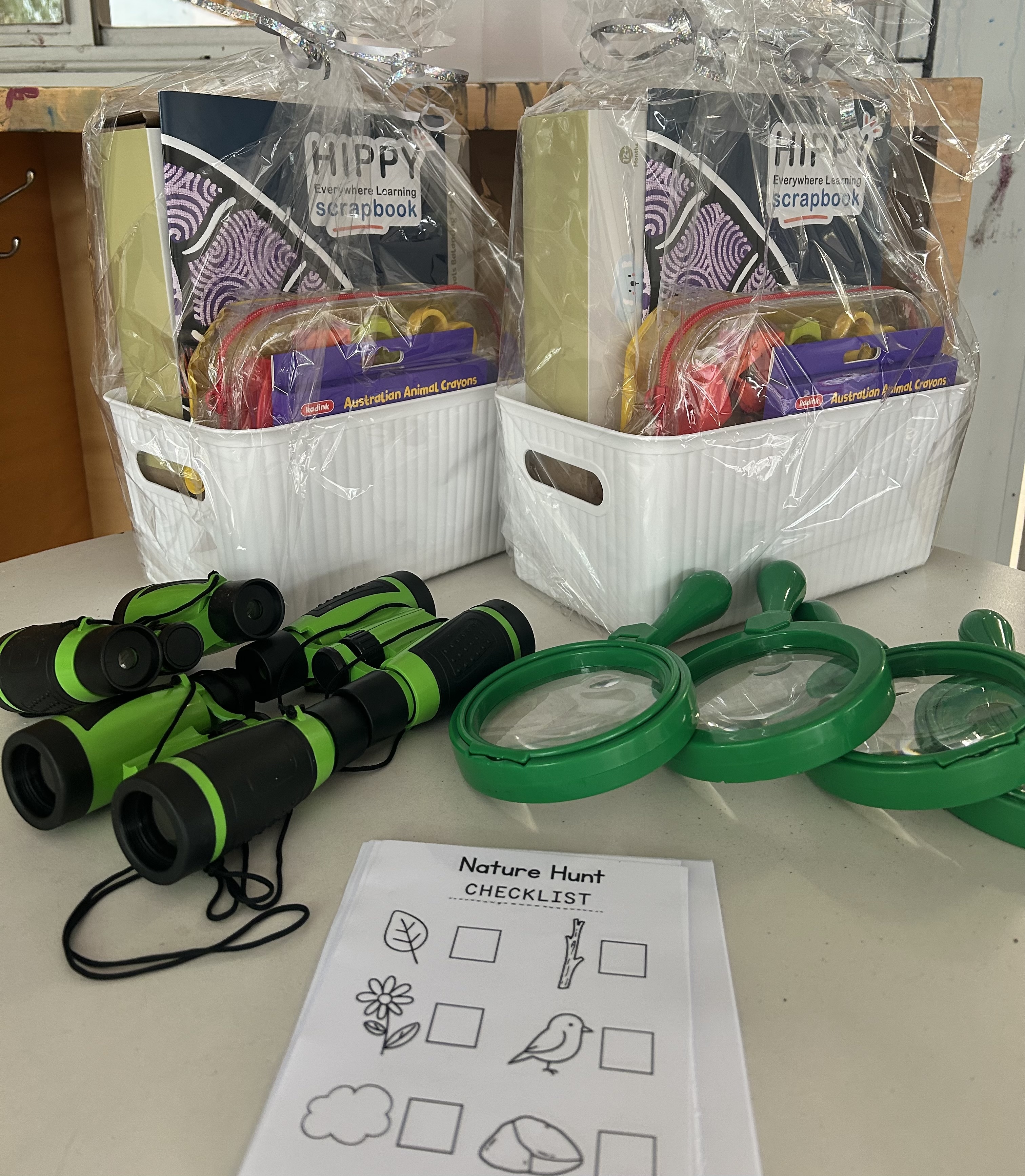
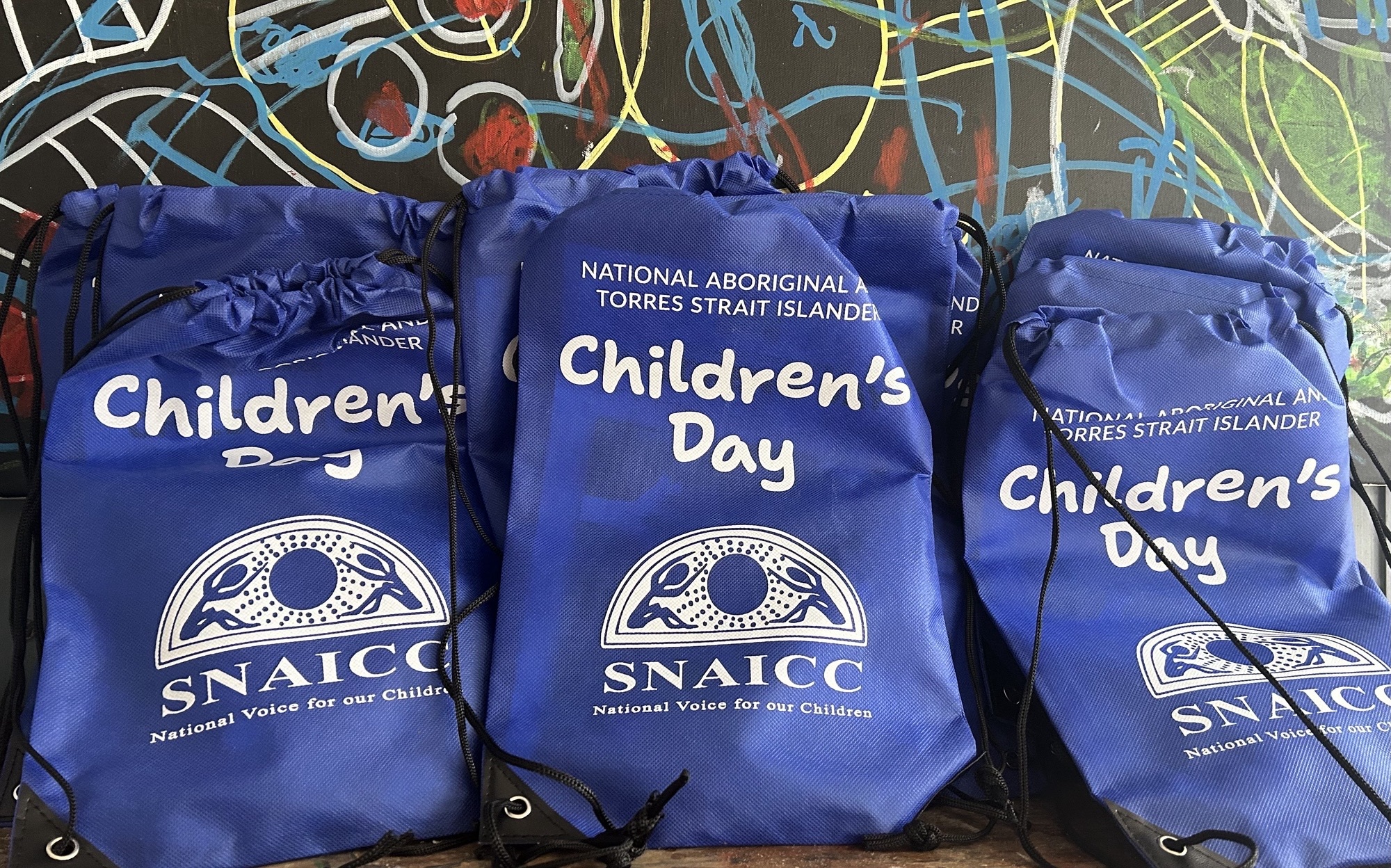
the local Aboriginal medical service, as well as the nature hunt at Ngroo's National
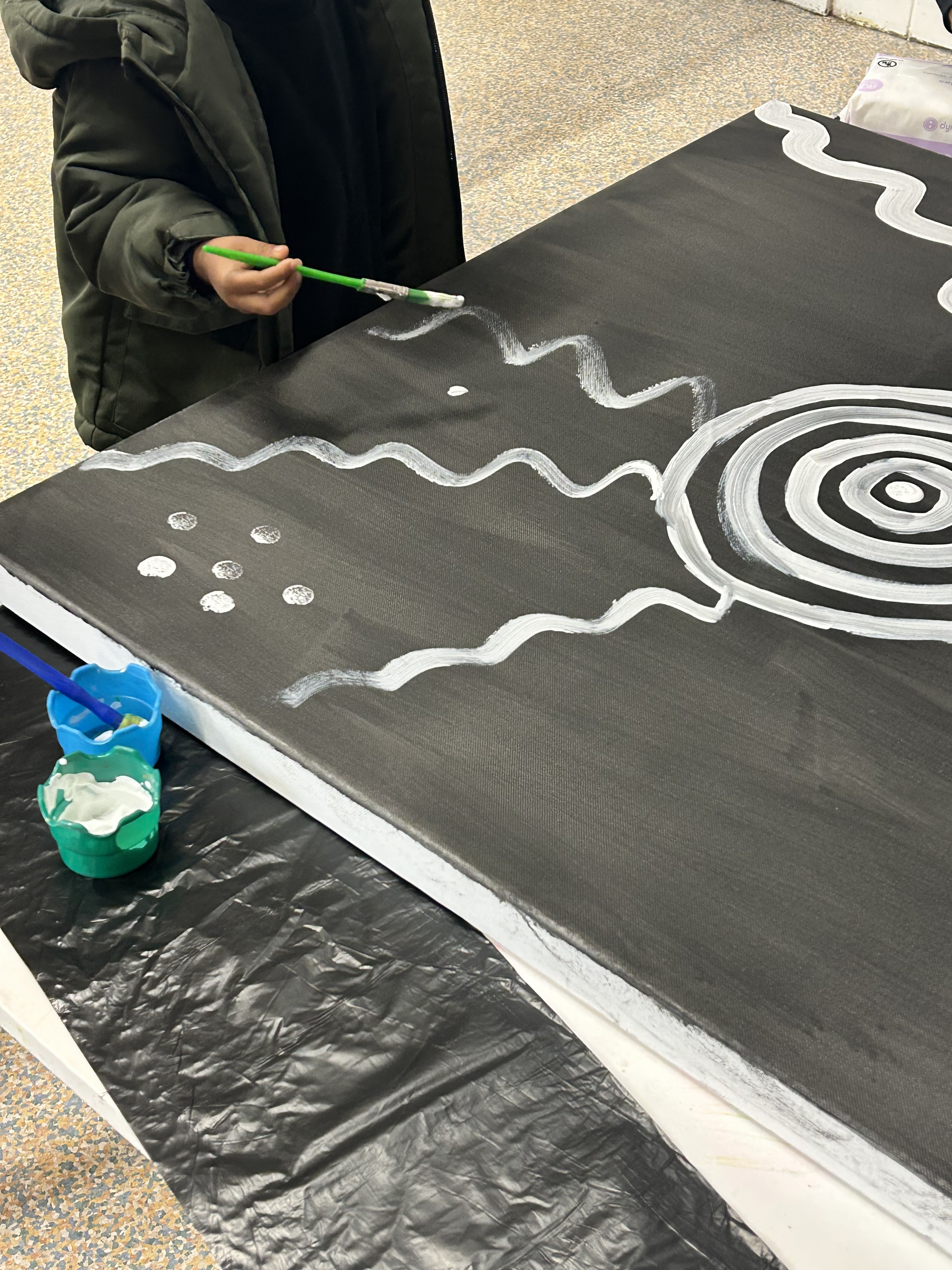
Aboriginal and Torres Strait Islander Children's Day celebration in under seven months of operation.
Crucially, the tutors stayed through the transition, bringing the program knowledge with them. Ten or eleven Age 4 families transitioned with their tutors and have shared learnings with Letitia as she found her feet. "They'd say, oh, we do this, or this is what we've done previously; and it gave me an understanding of how it could look for us."
Additionally, gatherings have moved to a monthly format and are shifting venues to run a combined Age 3 and Age 4 model. Letitia is also busy lining up a presentation to the local early childhood educators network, in planning for next year.
Deep local knowledge, warm referral pathways, and a team that held together. Emerton is one to watch.
 |  |
 |  |
With thanks to Letitia Williams and Line Manager Matt Norris at Ngroo.
This September, HIPPY Dandenong, delivered by the Southern Migrant and Refugee Centre (SMRC) in Greater Dandenong since 2011, celebrated fifteen years of continuous delivery with a reunion-style event for past and present Tutors. And the milestone celebration didn't stay in the room.
At the centre of the event was the premiere of Seeds of Learning: 15 Years of HIPPY Stories, a cinematic reel bringing together Tutor interviews and archival photos from across the program’s 15 years. The keynote was delivered by Cr Lana Formoso, the Mayor's delegated representative and former Mayor of Greater Dandenong (2023-2024). Local councillors and HIPPY Australia Senior Manager Siska Frederick joined the celebration.
Early in the planning process, the SMRC team began thinking about how the milestone story could extend beyond the event. They worked with the HIPPY Network Engagement team to develop a local media pitch that highlighted both the celebration and its broader significance.
The pitch resulted in coverage in Star Weekly across two articles: one on the celebration itself, and one that picked up the broader story the milestone sits inside: what fifteen years of a home-based early learning program looks like in a community shaped by migration and resettlement. Coverage achieved a combined reach of over 66,000 readers.
- Happy for HIPPY: Mums bring preschoolers up to speed | Dandenong Star Journal
- Politics aside, here's a migration success story | Dandenong Star Journal
What made the coverage strong was the story beneath the anniversary. The SMRC team highlighted what 15 years of HIPPY had made possible, sharing how families who were new to Australia had built on their experiences with HIPPY to become teachers, early childhood educators and community leaders.
By identifying this broader story early, SMRC was able to celebrate an important milestone while also showing HIPPY’s lasting contribution to families and the community.
If your site has a graduation, anniversary or partnership coming up, think about the larger story it could help tell. What has changed, who has benefited, and why might the wider community care?
Contact the HIPPY Australia inbox and connect with the HIPPY Network Engagement team for help pitching your story to local media.
HIPPY Australia uses media monitoring to identify and share stories of success and community impact from across the network. If your site would like support to promote a story through local or national media, please contact the Network Engagement team via the HIPPY Australia inbox .
If your site has received media coverage that we may have missed, we encourage you to share it with us so we can celebrate and promote these achievements across the network
Days of Recognition
As we move into October, the following dates offer meaningful opportunities for Gatherings themes, discussions, and community connection.
Keep an eye on our Facebook page for posts to like, share, and tag.
Please share your site stories, highlights, Gatherings, and photos with us (Query type: Other, Subject: Newsletter Content).
Anti-Poverty week, celebrated nationally, focuses on the causes and effects of poverty in Australia.
It is timed around the United Nations International Day for the Eradication of Poverty celebrated on 17 October. Closely linked to BSL’s vision for an Australia free of poverty, Anti-Poverty Week encourages everyone to raise their voices, share their experiences, and support solutions that build a more equitable future.
When children grow up in poverty in the first 5 years of their lives, it can have significant implications for their development. This week, we are thinking about the barriers that are worth removing.
#AntiPovertyWeek #HIPPYAustralia #EarlyLearning
Around three million Australians provide unpaid care for someone they love. National Carers Week celebrates and raises awareness for Australia’s unpaid carers. Carers make up nearly 11% of our population and come from all backgrounds, balancing caring with work, study, and their own wellbeing.
More than 391,300 young carers provide essential support, sometimes for parents, siblings, or friends, making a vital difference at home and in their communities. The 2026 theme, “Care for a carer: Making carers visible,” shines a light on the invaluable contribution carers make.
Many HIPPY families and many Tutors are carers. We see how much you carry, and we are glad you are part of HIPPY.
#NationalCarersWeek #HIPPYAustralia
A reminder that not every disability is visible. Invisible Disabilities Week shines a light on the millions of Australians living with conditions that aren’t always visible but have a very real impact on daily life.
Flexibility in how we deliver and communicate makes the program work for more families: Tutors who ask what would make this easier, and a program that adapts rather than expecting the family to.
Look for the sunflower, as it is a quiet signal that someone may need a little more time or space.
#InvisibleDisabilitiesWeek #HIPPYInclusive
Children’s Week celebrates children’s rights and their right to enjoy childhood, to be heard and to thrive. The 2026 theme draws on Article 30 of the United Nations Convention on the Rights of the Child: children have the right to use their own language, celebrate their culture and practise their religion.
Research shows that play and relaxation are essential for healthy development and wellbeing. Led by the Children’s Week Council of Australia, this week encourages families, schools, and communities to support and celebrate children’s voices and rights in every community. The theme sits very close to home for HIPPY.
It is also a silent acknowledgement of all that Sites achieve inherently: delivery in language, storybooks shared in a family’s first language, and Gatherings shaped by the cultures in the room.
#ChildrensWeek #HIPPYAustralia #ChildrensRights